 CHAPTER I — The House
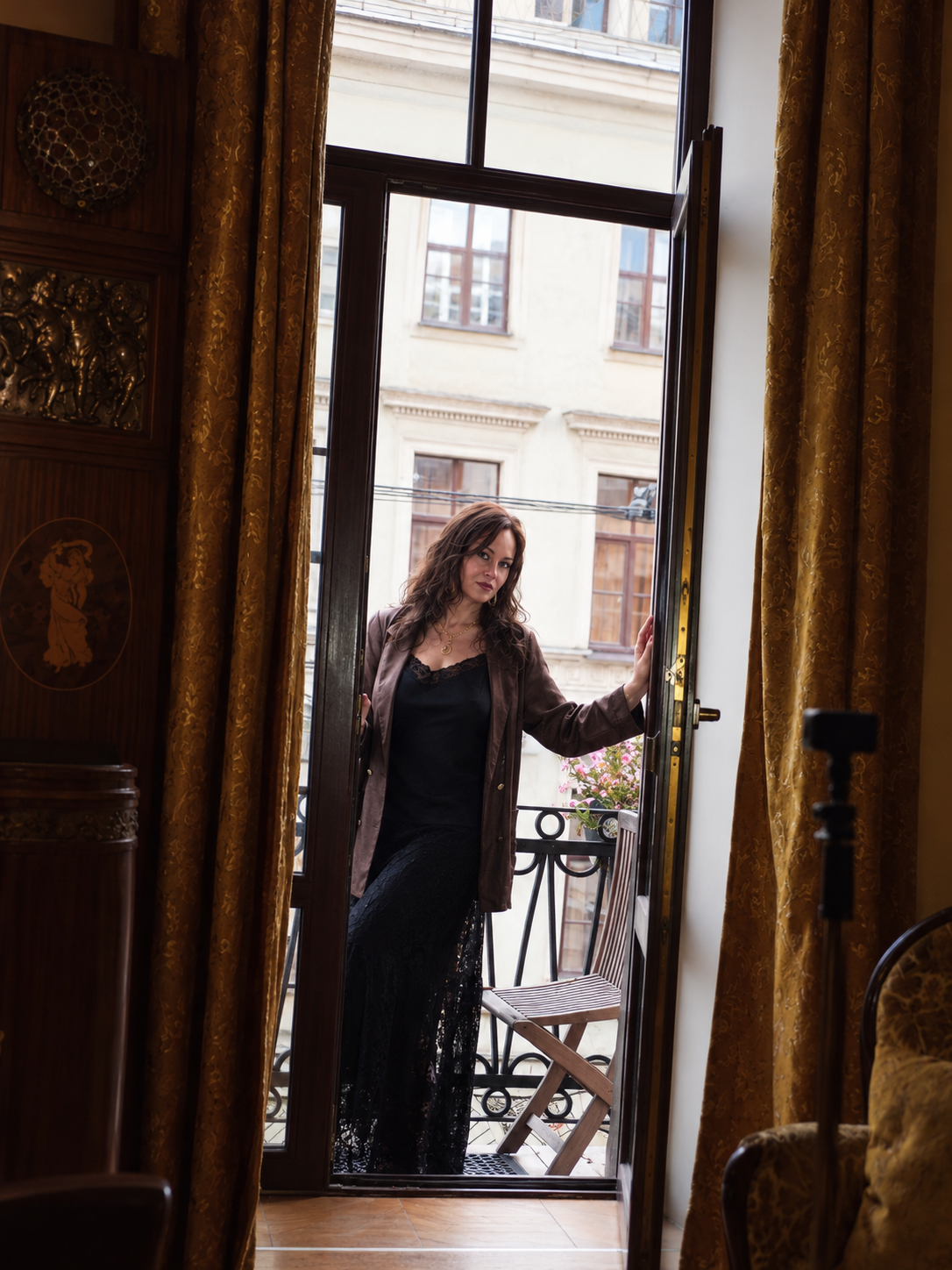
The first thing that struck me about the hotel was that it does not feel like a conventional historical museum.
It feels lived in.
The interiors are filled with wood, paintings, carved details, golden fabrics, mirrors and objects that belong to another aesthetic world. There is an atmosphere of accumulated time rather than a perfectly reconstructed historical set.
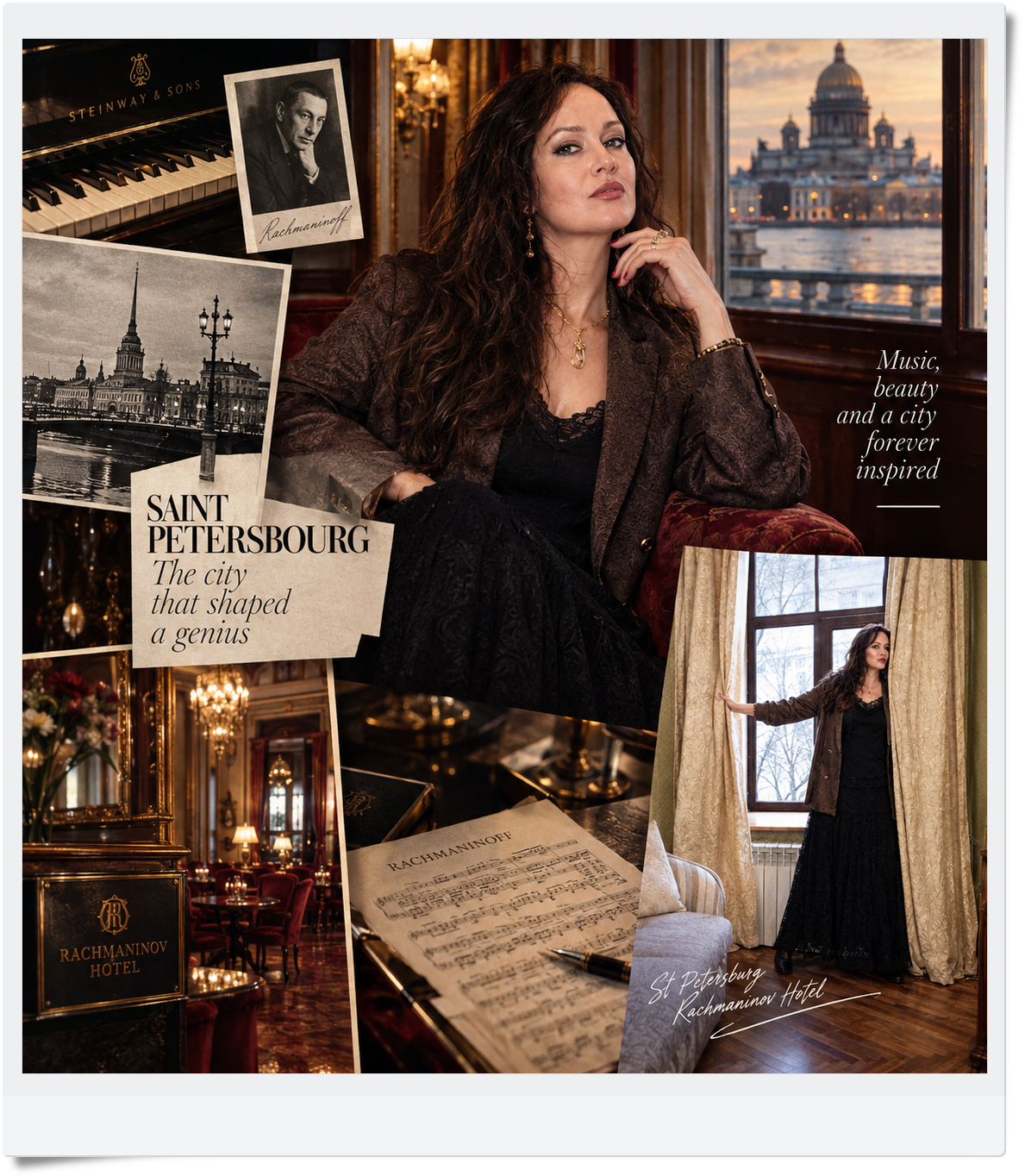
The hotel is deeply connected with the memory of Sergei Rachmaninoff. The young Rachmaninoff really lived in this house in the mid-1880s, during his years of study at the conservatory.
That fact changes the way you look at the rooms.
Suddenly, the furniture is no longer simply furniture.
A door becomes a possible threshold between two lives.
A window becomes a view that someone from another century once knew.
A room becomes a place where a young musician — long before the world knew his name — was simply living, studying, struggling, dreaming.
The staff of the Art Hotel Rachmaninov preserve this connection with remarkable care and affection. The interiors and atmosphere are maintained not simply as decoration, but as part of a cultural memory.
And this was exactly what I wanted to experience.
Not Rachmaninoff as a monument.
Rachmaninoff before the monument.
CHAPTER II — The Room
When I entered the room associated with Rachmaninoff, I immediately became conscious of the strange distance between what we know and what we can actually feel.
We know the dates.
We know the biography.
We know the music.
We know the photographs.
But what does it mean to stand in a room where the young man who would eventually write some of the most recognizable piano music in the world once spent part of his youth?
I tried not to approach it intellectually.
Instead, I looked.
The wooden furniture. The old-fashioned decoration. The mirrors. The warm golden light. The proportions of the room.
Everything seemed to encourage the imagination.
For a few moments, I tried to forget the Rachmaninoff we know from concert halls and recordings.
I wanted to imagine the young pianist and composer instead.
A student.
A young artist.
Someone who did not yet know what his future would become.
Perhaps this is one of the most fascinating things about visiting places connected with artists: you encounter them before history has finished writing their story.
CHAPTER III — Looking in the Mirror
There was something almost theatrical about the mirrors in the room.
Standing in front of one of them, I suddenly became very aware of time.
The mirror reflects the present.
But the room belongs partly to the past.
And somewhere between the two, imagination begins to work.
I found myself wondering what it would mean if Rachmaninoff could suddenly walk into the room today.
Would he recognize it?
Would he be amused by the idea that people now come specifically to stand where he once stood?
Would he recognize the room at all?
These questions are impossible to answer.
But perhaps that is the beauty of them.
I was not trying to recreate the past.
I was trying to sense it. And that is a very different thing.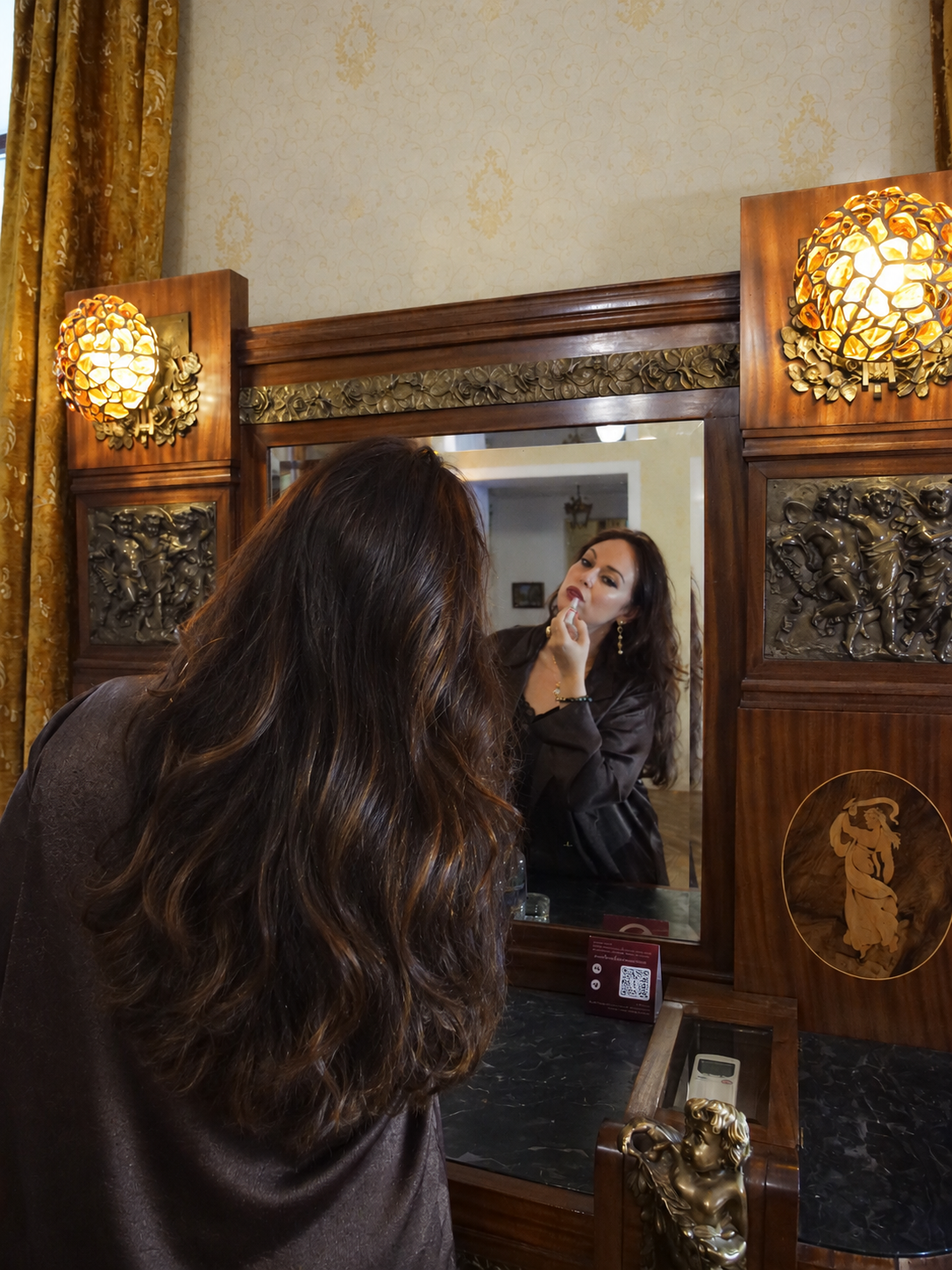
CHAPTER IV — Anna in Rachmaninoff’s Room
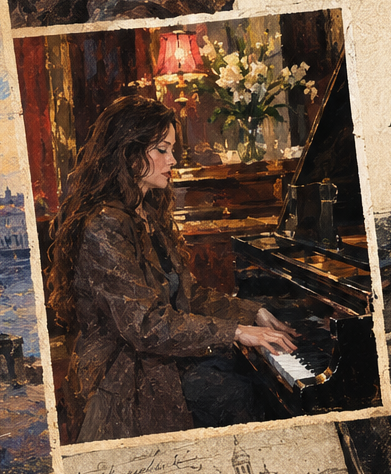
Being there as a pianist made the experience particularly personal.
I have always felt that music creates a strange relationship with time. When we play a work written more than a century ago, we are performing in the present — but our hands are entering into a conversation with someone who is no longer here.
That conversation is invisible.
The room made it visible.
I wanted to photograph myself there not as a historical character and not as someone pretending to be from another century.
I wanted to remain myself.
A pianist of today, standing inside a space connected with a pianist of the past.
Two moments of time occupying the same room.
That became the central idea of this journey for me:
not becoming someone else, but allowing the past to meet the present.
CHAPTER V — The City Outside
Eventually, of course, you leave the room.
And Saint Petersburg is waiting outside.
That contrast was important to me.
Inside: the preserved atmosphere of another time.
Outside: the contemporary city, moving, changing, carrying on.
Cars pass through the streets. People hurry somewhere. The architecture contains centuries within a single view. Old façades meet modern life without asking permission.
Saint Petersburg itself seems to work this way.
It is a city where different centuries constantly overlap.
Perhaps this is why it felt like the right place to record an album built around memory, atmosphere and the idea of things that remain with us.
You can walk through the city and suddenly feel that you have entered another visual world.
Then, a few steps later, you are completely back in the present.
CHAPTER VI — From a Room to a Recording
My visit to the Art Hotel Rachmaninov was not separate from the musical project.
It became part of it.
The album Remanence Suite grew out of a world in which memory is not static. It changes, fragments, returns, disappears and sometimes unexpectedly becomes vivid again.
Recording in a place so closely associated with Rachmaninoff added another layer to that experience.
There is something powerful about making music in a space where the history of piano music feels almost physically present.
The hotel became more than a location.
It became part of the atmosphere surrounding the album.
The textures of the interiors, the old furniture, the paintings, the mirrors, the changing light — all of these things entered my experience of the project.
I began to think about how much of an artist survives in places.
Not only in scores.
Not only in recordings.
But in architecture, objects, rooms and stories.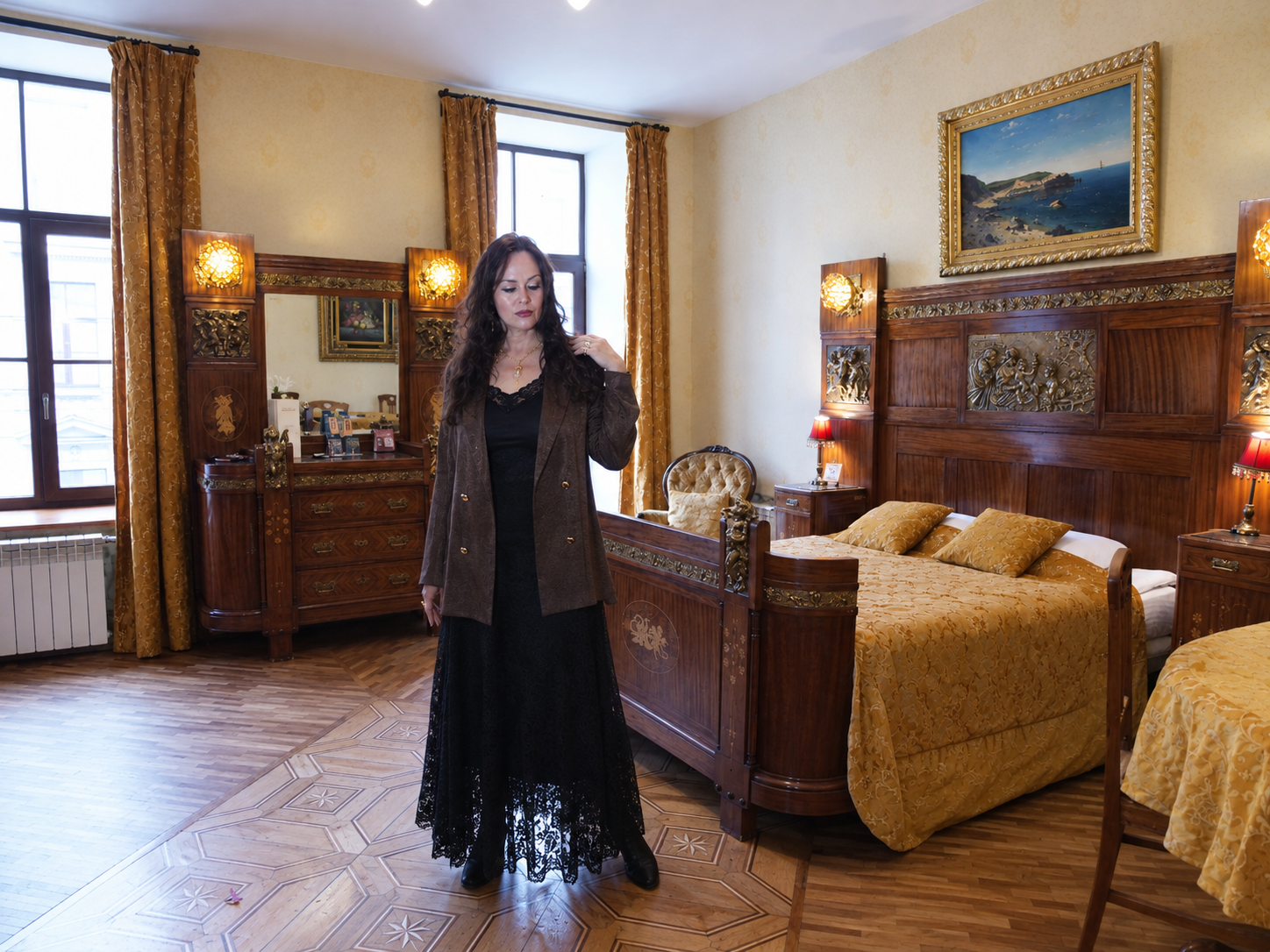
CHAPTER VII — Jumping Eras
Perhaps the most unusual part of this experience was realizing that I did not actually want to remain in the past.
I wanted to move between times.
To be Anna, standing in the room today.
To imagine the young Rachmaninoff there more than a century ago.
Then to return to the present.
Then to hear his music again.
Then to think about my own music.
Then to walk outside into modern Saint Petersburg.
Then back into the room.
It became a kind of movement — almost musical.
Past.
Present.
Memory.
Imagination.
Reality.
Return.
This is what I mean when I say jumping eras.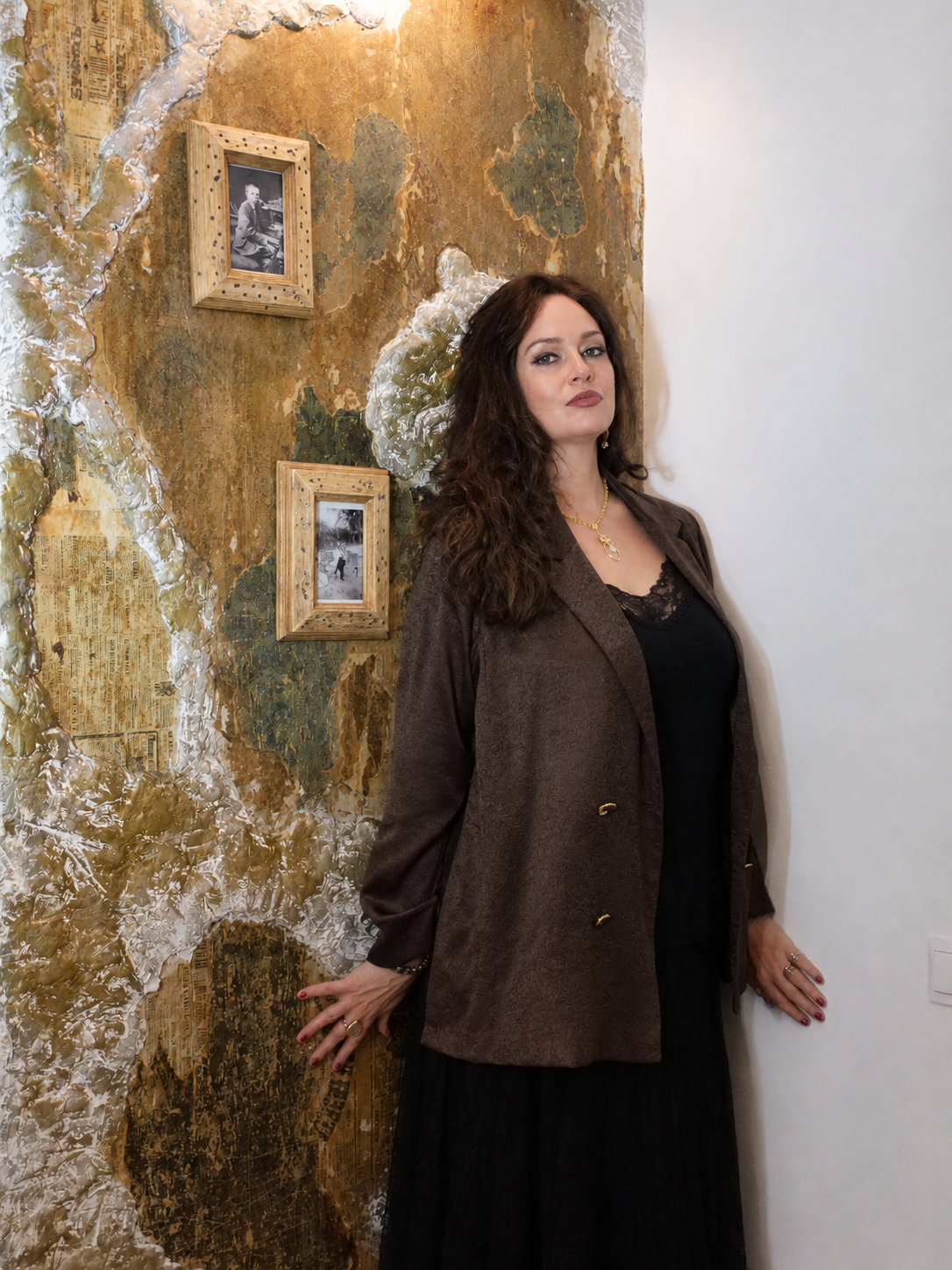
CHAPTER VIII — What Remains
The word remanence has stayed with me throughout this project.
Something remains after the original experience has disappeared.
A trace.
A vibration.
A memory.
A feeling that continues after the sound itself has stopped.
Perhaps this is also what happens when we encounter the places of artists we admire.
We know that we cannot truly travel backwards in time.
We cannot meet the young Rachmaninoff.
We cannot hear the sounds that surrounded him in that room.
We cannot know exactly what he saw when he looked through those windows.
But we can stand there.
We can listen.
We can imagine.
And sometimes imagination is enough to make history feel unexpectedly close.
CHAPTER IX — The Album
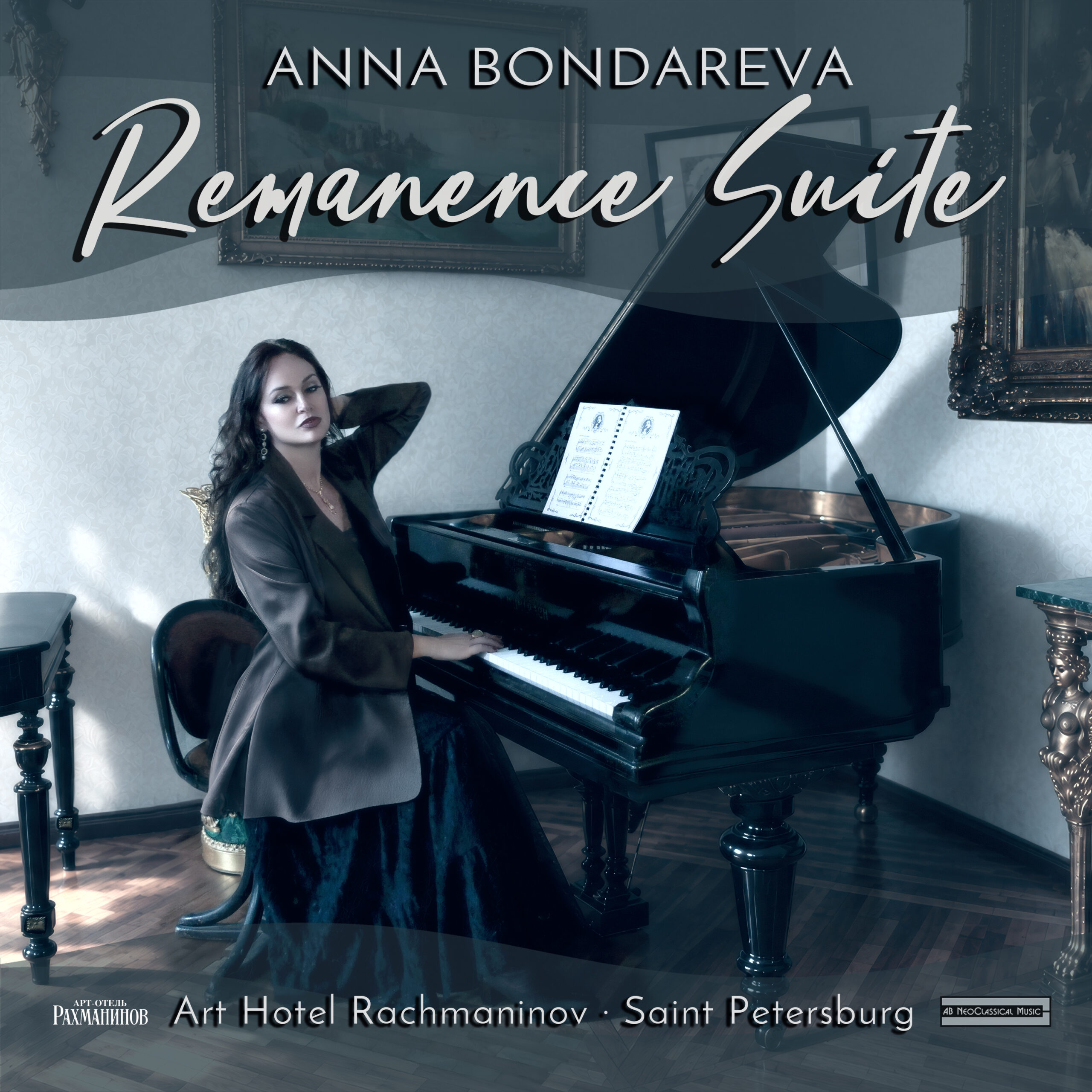
Remanence Suite will be released on 22 October.
For me, the album is not simply a collection of pieces.
It is a journey through states of memory — through what disappears and what somehow remains.
The experience of being in Rachmaninoff’s world added an unexpected dimension to that journey.
It reminded me that music is never completely detached from place.
We often think about composers through their scores.
But composers also belong to rooms, streets, cities, landscapes and moments.
And sometimes, to understand what a musical world means to us, we have to physically enter one of those places.
That is what I tried to do in Saint Petersburg.
CHAPTER X — After the Door Closes
When I finally left the room, I had the strange feeling that I had not really finished the visit.
Perhaps that is the point.
Some places do not end when you leave them.
They follow you.
A room can remain in your imagination.
A face in an old photograph can return unexpectedly.
A melody can suddenly sound different because you now know where its composer once lived.
And a hotel room, preserved with care more than a century later, can become a meeting point between people who will never actually meet.
The young Rachmaninoff.
The Rachmaninoff we know from history.
And the musicians who continue to discover him today.
I came to the Art Hotel Rachmaninov to get closer to the past.
I left thinking about the present.
And about what it means for one artist’s creative life to continue speaking to another artist, across generations, across cities, and across time.
Perhaps that is what music does best.
It makes time porous.
You listen — and suddenly you are somewhere else.
You enter a room — and suddenly someone from another century is almost there.
You play a piece — and for a moment, the distance between then and now disappears.
That was my experience in Saint Petersburg.